Digestive Issues and Disordered Eating: What’s Actually Going On?
Disclaimer: This content is for informational purposes only and does not constitute medical advice.
Why Digestive Issues Are So Common with Dieting and Disordered Eating
One of the most common things I hear from clients is:
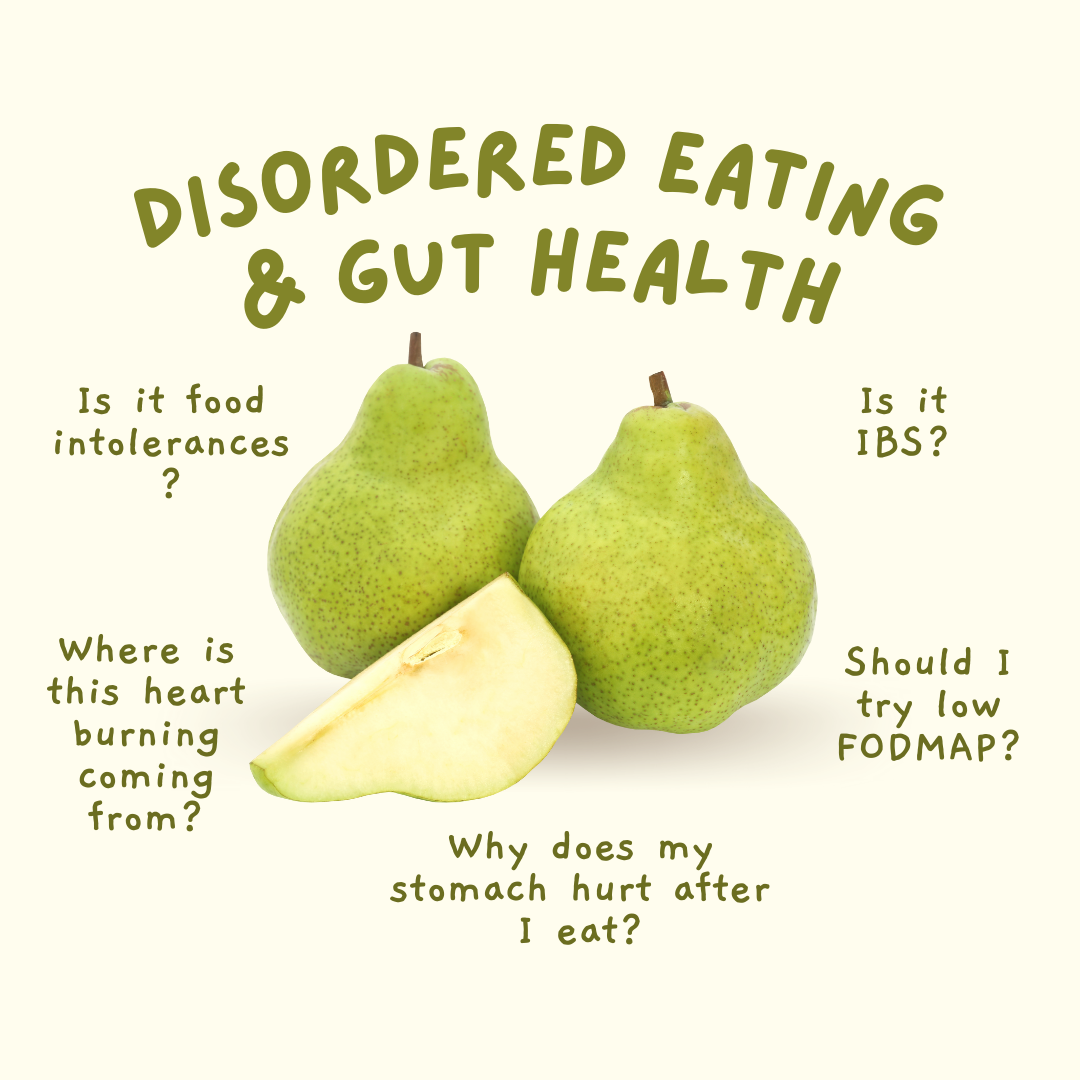
“Why does my stomach hurt after I eat?”
“Do I have IBS?”
“Is this a food intolerance?”
“Should I try low FODMAP?”
If this sounds familiar, you’re not alone.
Digestive symptoms like bloating, reflux, constipation, and abdominal pain are incredibly common in people who have been chronically dieting, under-eating, or struggling with disordered eating. And while these symptoms can look like conditions such as Irritable Bowel Syndrome (IBS), the root cause is not always a primary gut disorder.
In many cases, your body is responding to not getting enough energy, consistency, or variety in your intake.
Your Digestive System Needs Energy to Work Properly
Your digestive system isn’t passive. It’s actually one of the most energy-demanding systems in your body.
It relies on a coordinated balance of:
- digestive enzymes and secretions
- hormones (like insulin)
- fluid and electrolyte balance
- gut bacteria (your microbiome)
- and the physical movement of food through your GI tract
When you’re under-eating or restricting certain foods, research suggests this can disrupt multiple parts of that system. [1,2]
Chemical Digestion: Enzymes and Gut Bacteria
Your body needs digestive enzymes to break food down so you can absorb it. There is some evidence that prolonged undernutrition may reduce enzyme activity in the gut (such as enzymes that help digest carbohydrates and fats), which may contribute to symptoms like bloating or discomfort when eating certain foods. [4]
Your gut microbiome is also affected. When you’re not eating enough overall, or your diet lacks variety, the types of bacteria in your gut can shift. [5,6] Since these bacteria rely on nutrients, especially carbohydrates and fiber, restriction may reduce beneficial strains and impact digestion. These changes are not necessarily permanent, but they can help explain why symptoms show up during periods of restriction.
Mechanical Digestion: Slowing Everything Down
Undereating doesn’t just affect what’s happening chemically, it also affects how food moves through your body.
Energy restriction has been associated with slower gastrointestinal motility, meaning:
- your stomach may empty more slowly
- food moves more slowly through your intestines
This can contribute to symptoms like:
- reflux
- bloating
- constipation
- feeling overly full quickly [2]
In more severe cases of malnutrition, structural changes to the gut lining have been observed, particularly in pediatric populations, [7] though this does not occur in all cases.
Why Symptoms Can Feel Worse When You Start Eating More
This is the part that throws a lot of people off.
When you start eating more consistently again, it’s very common to feel more digestive discomfort at first.
This can include:
- bloating
- gas
- reflux
- abdominal pain
During nutritional rehabilitation, the digestive system is essentially “waking back up,” and it can take time for motility and digestion to normalize. [9]
It’s uncomfortable, but in many cases, it’s temporary.
What About Food Intolerances?
A lot of people come into this with long lists of “foods they can’t tolerate.”
And sometimes those intolerances feel very real.
But we also know that gastrointestinal symptoms are highly prevalent in individuals with eating disorders. [2] Without looking at overall intake patterns, it’s easy to assume that specific foods are the problem.
In some cases, removing more and more foods (like going on a low FODMAP diet) may not address the root issue if the underlying cause is inadequate intake or restriction, and may further reduce dietary variety.
That doesn’t mean intolerances aren’t real. It just means they need to be assessed in the full context of your eating patterns and overall nutrition.
The Bottom Line
- Digestive issues are very common with chronic dieting and disordered eating
- Undereating can affect enzymes, gut motility, and the microbiome
- Symptoms like bloating, reflux, and constipation don’t automatically mean IBS or food intolerances
- Digestive discomfort can temporarily increase when intake improves
- Restricting more foods is not always the solution
If you’re dealing with ongoing digestive symptoms, it’s important to look at the full picture. Working with a registered dietitian with eating disorder experience can help you figure out what’s actually going on and what your body needs.
Written by: Mackenzie Michalczuk, RD, CDE
References
- Chung SH, Zhang H. Starvation and its effects on the gut. Adv Nutr. 2021;12(1):1–10
- Sato Y, Fukudo S. Gastrointestinal symptoms and disorders in patients with eating disorders. Clin J Gastroenterol. 2015;8:255–263
- Geliebter A, et al. Appetite-related gut peptides in obesity and binge eating. Appetite. 2008
- Geyra A, Uni Z, Sklan D. The effect of starvation on the small intestinal epithelium and disaccharidase activity in the young rat. Dig Dis Sci. 2001;46(7):1430–1437
- Subramanian S, Mahowald MA, Gordon JI. Uncovering the complexity of childhood undernutrition through strain-level analysis of the gut microbiome. BMC Microbiol. 2024;24:211
- Tremaroli V, Bäckhed F. Functional interactions between the gut microbiota and host metabolism. Nature. 2012;489:242–249
- Jones KD, Hübscher SG, Mpabanzi L. Gastrointestinal changes in paediatric malnutrition that may impact nutrition choice. J Pediatr Gastroenterol Nutr. 2025;80(2):250–260
- Wittekind DA, et al. Leptin and ghrelin in the regulation of eating behaviour. Front Psychiatry. 2023
- Mehler PS, Winkelman AB, Andersen DM, Gaudiani JL. Nutritional rehabilitation: practical guidelines for refeeding the anorectic patient. J Nutr Metab. 2010
- Baenas I, et al. Neuroendocrinological factors in binge eating disorder: A narrative review. Psychoneuroendocrinology. 2023