What Is Binge Eating Disorder?
Disclaimer: This content is for informational purposes only and does not constitute medical advice.
What Is Binge Eating Disorder?
Binge Eating Disorder (BED) is the most common eating disorder worldwide.
It is characterized by:
- eating a large amount of food within a discrete period of time
- a sense of loss of control while eating
- and significant distress afterward (such as guilt, shame, or discomfort)
Binges often happen quickly, and many people describe feeling “out of control” during the episode. Some people experience these episodes as a blur or feel disconnected from what they’re doing, while others feel very aware but unable to stop.
To meet diagnostic criteria, binge episodes typically occur at least once per week over several months. [1]
A key distinction with BED is that it does not involve regular compensatory behaviours (such as purging or excessive exercise) that are seen in other eating disorders. [1]
Objective vs. Subjective Binges
Not all binge episodes look the same.
- Objective binge: Eating what is considered a large amount of food, with a clear sense of loss of control
- Subjective binge: The amount of food may not be objectively large, but there is still a strong sense of loss of control and distress
Both experiences are valid and clinically relevant. The feeling of being out of control around food is often the most important piece.
Binge Eating vs. Normal Eating
Having a bowl of ice cream after a long day, or eating more than usual at times, is a normal part of being human.
Food is not just fuel. It plays a role in:
- comfort
- connection
- celebration
- routine
There is nothing inherently wrong with using food for comfort.
What differentiates binge eating disorder is the repeated pattern of:
- feeling out of control around food
- experiencing significant distress (guilt, shame, or anxiety)
- and feeling stuck in a cycle that is hard to break [2]
Why Does Binge Eating Happen?
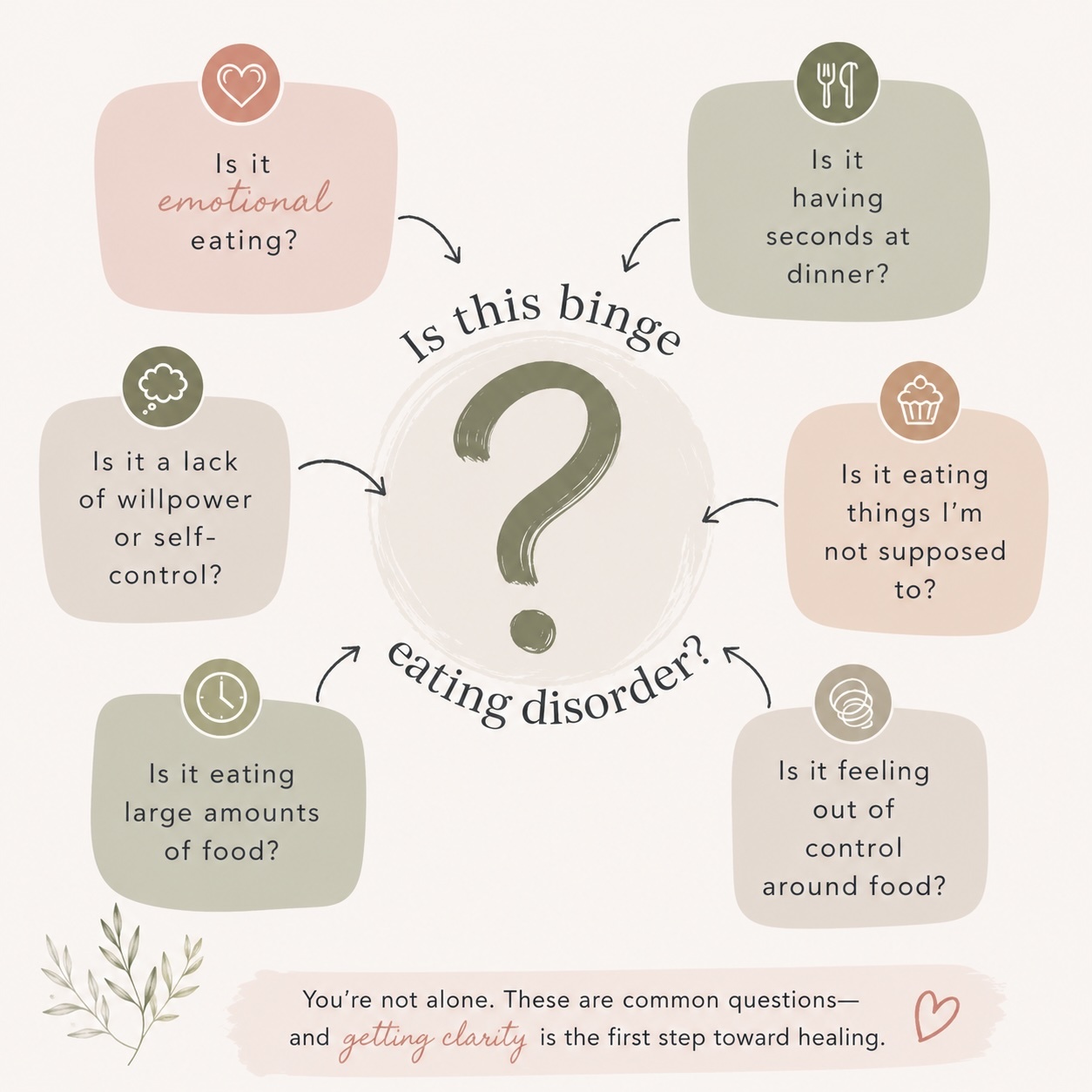
Binge eating is not about a lack of willpower. It is understood to involve a combination of biological, psychological, and emotional factors. [1]
1. Biological Factors
One of the strongest and most consistent risk factors for binge eating is chronic dieting or restrictive eating. [1]
When the body is not getting enough energy consistently, several physiological adaptations can occur:
- increases in hunger signals
- changes in satiety cues
- increased drive to seek out energy-dense foods
Research suggests that energy restriction and irregular eating patterns can influence hormones involved in appetite regulation, including ghrelin (which stimulates hunger) and leptin (which signals satiety), as well as neuropeptides involved in food motivation. [3,4]
There’s also evidence that the parts of your brain involved in stress and reward play a role in binge eating. When these systems are activated, they can increase the urge to eat, especially if you've been restricting. [5,6]
Rather than happening immediately, these changes tend to build over time. As restriction continues, the drive to eat can become stronger and feel more urgent or out of control. This is a biological response, not a personal failure.
2. Psychological Factors
Cognitive patterns can also play a significant role.
Common examples include:
- all-or-nothing thinking (“I already messed up, so it doesn’t matter anymore”)
- rigid food rules (labeling foods as “good” or “bad”)
- heightened attention and preoccupation with food
Restricting certain foods often increases their appeal. When foods are repeatedly labeled as “off-limits,” cravings and urges can intensify over time.
3. Emotional Factors
Emotions can also contribute to binge eating, particularly when food becomes a primary coping strategy.
This might include eating in response to:
- stress
- loneliness
- boredom
- or difficult emotions
Some people with binge eating disorder tend to have a harder time regulating emotions, which can make food feel like one of the most accessible ways to cope. [7] That said, eating in response to emotions on its own isn’t the same as binge eating disorder. The key difference is the loss of control feeling and distress that follows.
The Cycle of Restriction and Binge Eating
For many people, binge eating is part of a cycle:
- Restriction (intentional or unintentional undereating)
- Increased biological and psychological drive to eat
- Binge episode
- Guilt, shame, or distress
- Return to restriction
This is a really common pattern, you're not alone in it. There are both biological and psychological factors at play, which is why the cycle can feel so hard to step out of once it’s been going for a while. [1,5]
The Bottom Line
- Binge eating disorder is a complex condition with biological, psychological, and emotional components
- It is not caused by a lack of willpower or “food addiction”
- Chronic dieting and restriction are major risk factors
- Occasional overeating or emotional eating is not the same as BED
- Recovery is possible, and treatment outcomes are generally positive with appropriate support
One of the most important first steps in recovery is developing a more consistent and adequate pattern of eating, often with the support of a registered dietitian trained in eating disorder care.
Written by: Mackenzie Michalczuk, RD, CDE
References
- Giel KE, Bulik CM, Fernandez-Aranda F, Hay P, Keski-Rahkonen A, Schag K, et al. Binge eating disorder. Nature Reviews Disease Primers. 2022;8(1):16
- Davis HA, Graham AK, Wildes JE. Overview of binge eating disorder. Current Cardiovascular Risk Reports. 2020;14:1–10
- Wittekind DA, et al. Leptin and ghrelin in the regulation of eating behaviour. Frontiers in Psychiatry. 2023
- Baenas I, Miranda-Olivos R, Solé-Morata N, Jiménez-Murcia S, Fernández-Aranda F. Neuroendocrinological factors in binge eating disorder: A narrative review. Psychoneuroendocrinology. 2023
- Boswell RG, Kober H. The neurobiology of binge-eating disorder differs from obesity: Implications for treatment. Neuropsychopharmacology. 2020
- Cassioli E, et al. Reward and psychopathological correlates of eating behaviours. Psychiatry Research. 2020
- Gianini LM, White MA, Masheb RM. Eating pathology, emotion regulation, and emotional overeating in obese adults with binge eating disorder. Eating Behaviors. 2013;14(3):309–313